

One of the most refreshing and simultaneously most calming procedures within the Ayurvedic massage tradition is the head massage and face known as shiroabhyanga. It is a healing ritual that favorably affects the overall physical and mental state. We will look closer at its multifaceted benefits and techniques of performance.
Benefits of head and face massage
Shiroabhyanga massage brings benefits on multiple levels. First and foremost, it stimulates the scalp and encourages healthy hair growth. Its regular practice can help prevent receding baldness or dandruff problems. It relieves tension in the neck, cheeks, forehead, and jaw, which unblocks the flow of life energy. Another benefit is its proven effect on relieving headaches, migraines, eye inflammation, or earache problems. Furthermore, Shiroabhyanga calms the mind, reduces stress, and promotes quality sleep. Appropriately chosen massage techniques stimulate the activity of the brain hemispheres and improve concentration.
Recommended oils for head massage
In Ayurveda, a selection of medicinal oils is used for shiroabhyanga massage. These not only moisturize and nourish the scalp but also have a beneficial effect on the mind with their aromatherapy properties. Sesame oil is a very popular oil for this massage. Coconut, almond, cashew, or black cumin oil are also suitable alternatives. Ayurvedic therapists often create their own blends of several oils for better effect.
Massage points and techniques for stress and migraine relief
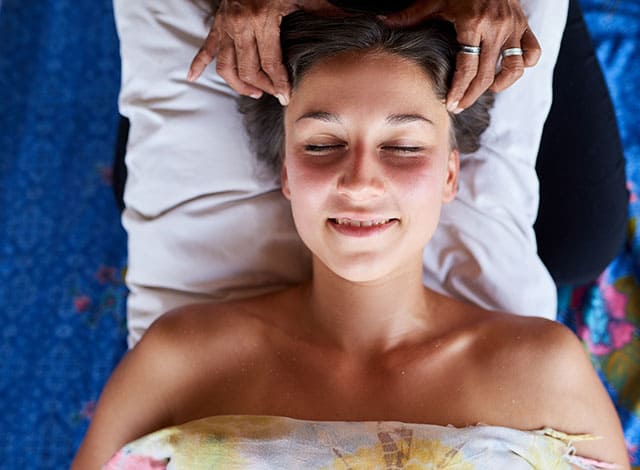
The shiroabhyanga head massage itself begins with gentle stroking in the neck, shoulder, and jaw area. Then, it continues to the scalp area, where circular movements are performed from the nape of the neck towards the forehead. It is advisable to focus on acupressure points on the forehead and the ends of the eyebrows.
Using gentle stroking and circular finger movements, gradually proceed to the temples and surrounding areas of the head. Throughout the entire massage, it is recommended to also use deeper finger pressure on key meridian points. Some Ayurvedic schools also teach more complex techniques using the elbow bones.
Other techniques such as nasya oil and earlobe massage
In addition to the scalp massage itself, shiroabhyanga also utilizes supplementary techniques to relieve head tension and enhance overall benefits.
One of these is the application of nasya oil directly into the nostrils. This procedure, also called nasya, promotes physical and mental recovery and relieves sinus swelling. A refreshing addition is also a special massage of the auricles and earlobes.
During the shiroabhyanga massage, we should ensure that the entire procedure is slow, fluid, and synchronized with the breath. Thanks to its comprehensive approach, it brings unprecedented relaxation and harmonization of both body and mind. It is a suitable choice wherever stress needs to be reduced, the mind relaxed, and the regenerative processes of the entire organism stimulated.