


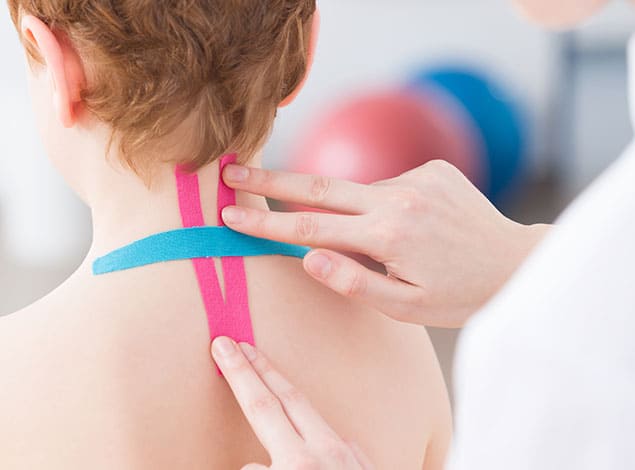
Taping is a modern method in medicine used to relieve pain and support treatment. This technique is gaining increasing popularity as an alternative treatment method and a helper in rehabilitation. Kinesiology taping is used not only in medicine, but also in sports, where it helps in the prevention and treatment of sports injuries. Its effect lies in the application of a special adhesive material to the body, which stimulates tissue regeneration and reduces pain and inflammation.
Kinesiology Taping and Its Principle
Taping is a medical technique in which an elastic adhesive tape is applied to the affected part of the body. Its main principle is to provide support and stabilization, thereby alleviating pain and inflammation. Taping uses the elasticity of the tape to create pressure and tension, which helps restore the normal function of muscles and joints. Thanks to its elasticity and adhesive properties, the tape easily adapts to body movements while providing sustained and lasting effects. This principle of taping is used in various fields of medicine and sports with the aim of relieving pain, supporting treatment, and accelerating the regeneration process.
Effects of Kinesiology Taping in Medicine
Taping in medicine has many positive effects on health and patient treatment. It helps reduce pain and inflammation, thereby synergistically supporting tissue healing. Taping strips also improve blood circulation and lymphatic drainage, which contributes to toxin removal and injury healing. In addition, they help stabilize and support affected muscles, joints, and tendons, improve movement and function, and thus increase the speed of rehabilitation. Thanks to its flexibility and comfort, taping can be a very effective technique in medicine that helps patients achieve faster and more efficient recovery.
Kinesiology Taping for Sports Injuries
Taping is of great importance in medicine, including the treatment of sports injuries. This modern approach offers quick and effective help in the prevention and treatment of athletes' injuries. Tapes are applied to specific affected areas, providing support and stabilization for ankles, knees, shoulders, and other key locations. They help maintain the correct position of joints and muscles, which reduces the risk of further injury. They also improve blood and lymph circulation, which aids in faster healing and tissue regeneration. Thus, taping is a very effective method in the treatment and prevention of sports injuries, helping patients return to form as quickly as possible.
Treatment and Prevention of Sports Injuries
Treatment and prevention of sports injuries are important aspects where taping can provide great help. In sports injuries, such as torn ligaments or strained muscles, it is advisable to apply tape to the specific affected area. Tape strips provide stability and support, which is important in rehabilitation and healing after an injury. In addition, taping also reduces the risk of further injury by helping to maintain the correct position of joints and muscles. Preventively, taping can also be used before training or a match to minimize the risk of injury. With the help of this modern method, athletes can return to their sports performance faster and with greater confidence.
Kinesiology Taping in Rehabilitation
Taping is a very effective method in rehabilitation that helps restore function and movement after an injury. Taping provides support and stability to affected areas of the body, which helps alleviate pain and restore muscle function. Tapes can be applied to various body parts, such as shoulders, knees, ankles, and back, and can be specifically shaped to support the diagnosis and individual needs of the patient. Taping also improves proprioception, which aids in better movement control and enhanced body stability. Therefore, taping is a very useful tool for rehabilitation and helps patients return to normal functioning more quickly.